
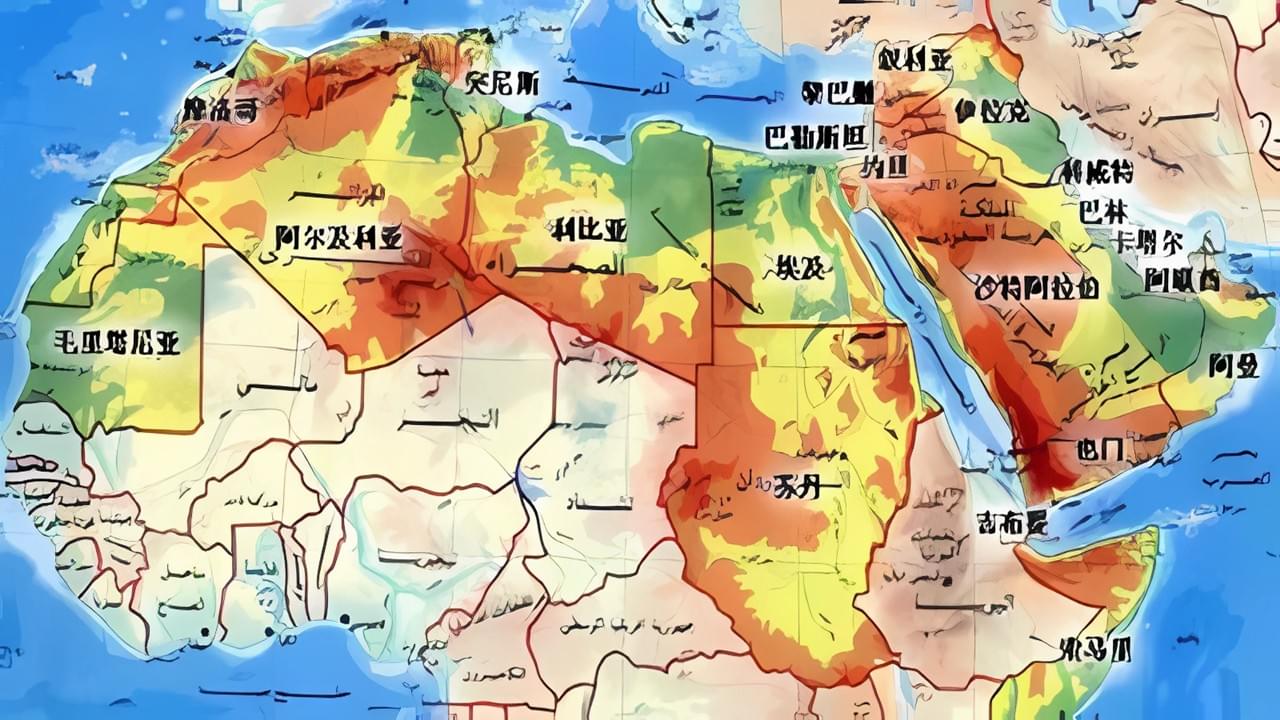
The art of beekeeping, or apiculture, has a rich history in the Arab world, with evidence of beekeeping dating back to ancient Egypt around 2400 BCE. Spanning across North Africa and the Middle East, the region is home to approximately 4.2 million colonies, maintained by 321,700 beekeepers, producing a total of 25,738 tons of honey with an average yield of 6.1 kilograms per colony.
1. Beekeeping in Algeria:
Algeria’s beekeeping is primarily concentrated in the north of the country, where floral diversity is ensured almost all year round. The south, home to over a million productive date palms, presents a unique set of challenges for bees, which must adapt to desert climates and resist harsh conditions such as extreme heat and strong prevailing winds.
Traditional hive types made from rock and earth have been known since antiquity in the Algerian desert. The modern Algerian beekeeping industry has seen the adoption of the Langstroth type frame hive, adapted to suit the hot weather, from which good honey yields have been obtained. Cooperatives are actively involved in beekeeping efforts, and research activities are conducted at the Institute of Small Animals.
Citrus, sunflowers, and many wild plants provide nectar for bees, with the main honey flow occurring in spring (February to May), although honey can be harvested year-round. The price of honey stands at 300 Algerian dinars per kilogram, and demand is robust. A beekeeper with 200 colonies can make a living from beekeeping. Oasis areas in the Algerian desert are suitable for breeding pure strains of bee species.
2. Beekeeping in Egypt:
The ancient Egyptians were among the first to domesticate bees in mud cells, known as fixed comb hives, over 5,000 years ago. The native Egyptian bee was a staple for pharaohs and nobility, and honey was frequently mentioned in papyrus prescriptions for treating human ailments such as eye diseases, wounds, and ulcers.
Egypt is one of the few countries with legislation and quality standards for honey or a codex for the sale of honey. Modern hives and traditional mud hives are clustered in the delta region, which produces 60% of the country’s honey, while 40% comes from Upper Egypt.
The Coptic Society for Social Services has distributed thousands of hives to increase the income of rural farmers living at subsistence levels in El Minya and Assiut governorates.
Egypt experiences two main nectar flows, one in June (clover) and another from August to September (cotton), with a third in April (citrus). The main challenges faced by Egyptian beekeepers include high hive density in one area, queen bee quality, the number of pests and diseases, and cases of pesticide poisoning. Solutions to these issues include expanding beekeeping to newly reclaimed lands, isolating mating stations for breeding purposes, and planting more nectar-producing plants.
3. United Arab Emirates (UAE):
Recently, there has been a significant increase in the number of modern hives in the UAE. Most bees used in beekeeping are imported from Egypt.
The UAE has also discovered numerous plants that yield honey.
4. Iraq:
Traditional clay hives and woven basket hives made from willow are still used in some areas. Clay hives are placed within clay bee houses with their entrances facing outward. This arrangement protects the bees from the cold of winter and the heat of summer, and they are virtually cost-free. For small-scale beekeeping, these inexpensive clay hives are more economical than frame hives. In the 1970s, there were hundreds of thousands of colonies in northern Iraq.
There is a significant demand for local honey and bees for crop pollination in Iraq. The indigenous bee species in Iraq is the Syrian bee. Nowadays, many Carniolan bees are introduced from Egypt.
In 1990, the small bee was discovered in the eastern region of Iraq. Iraq’s main food crops provide useful flowers for bees.
Beekeeping in Arab nations is a testament to the resilience and adaptability of both humans and bees in the face of harsh desert conditions. From the traditional methods employed in Algeria to the modern challenges faced by Egyptian beekeepers, the industry is diverse and rich in cultural significance. As the world recognizes the importance of bees for pollination and honey production, the beekeeping practices in Arab nations stand as a beacon of sustainability and economic vitality in some of the most arid regions on Earth.



 English
  Arabic