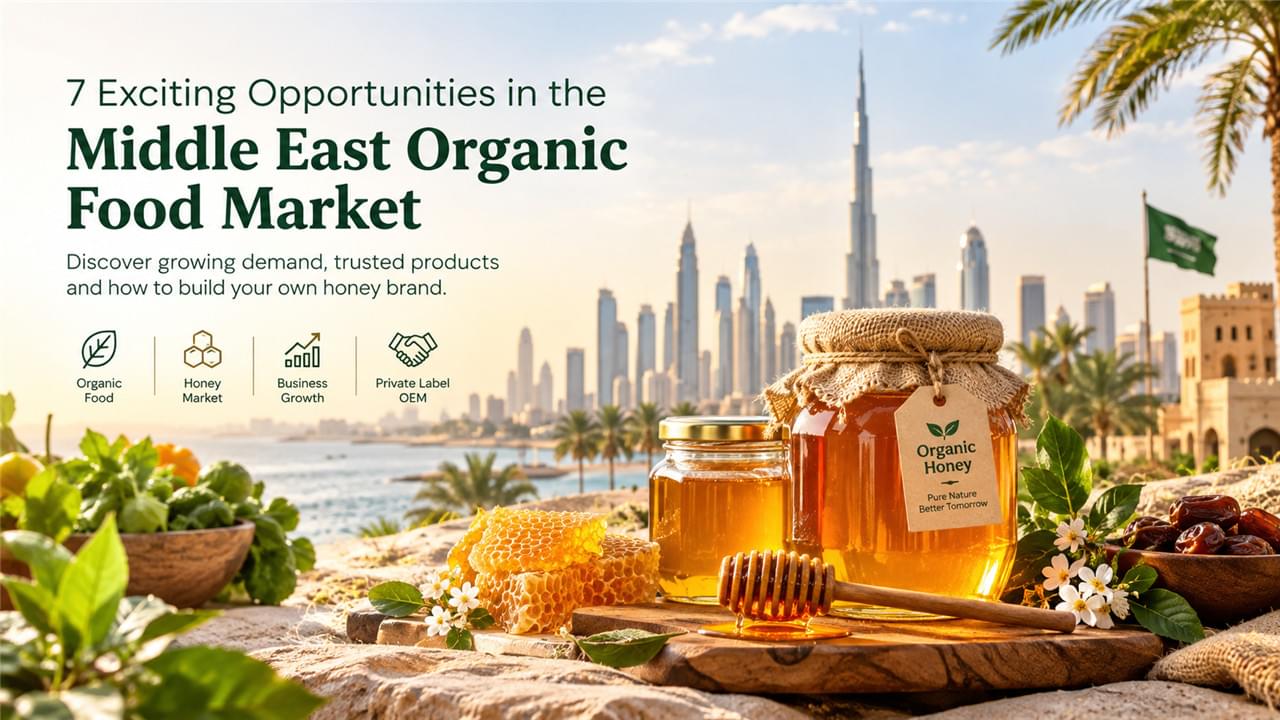
The Middle East organic food market is creating fresh opportunities for food brands, importers, and retailers seeking products with clear origins and credible quality standards. As consumer interest in natural ingredients grows and modern retail channels expand, organic honey is becoming an attractive category for businesses looking to develop differentiated food products.
Honey already has a familiar place in Middle Eastern food culture, from breakfast tables to hospitality and gift-giving. The opportunity for brands is to combine this familiarity with transparent sourcing, suitable packaging, and verified product claims.
1. Why the Middle East Organic Food Market Is Growing
According to IMARC Group’s market report, the Middle East organic food market reached approximately USD 10.72 billion in 2025. The report projects growth to USD 16.65 billion by 2034, with a forecast CAGR of 5.02% for 2026–2034.
These are market estimates, not guaranteed results. Still, they indicate meaningful potential for suppliers that understand local preferences and retail requirements.
🌿 Several factors support this opportunity:
- Greater interest in ingredient transparency and food origins.
- Wider availability of premium products through supermarkets and online stores.
- Demand for attractive food gifts and specialty products.
- Opportunities for brands to compete through quality and presentation rather than price alone.
2. Saudi Arabia Organic Honey Market: A Promising Opportunity
Saudi Arabia is worth particular attention because honey has strong cultural relevance and a place in both everyday consumption and premium gifting.
A Market Xcel assessment projects that the Saudi Arabia organic honey market will grow at a CAGR of 4.12% from 2025 to 2032. The report estimates a market value of USD 11.24 million in 2024, reaching USD 15.53 million by 2032.
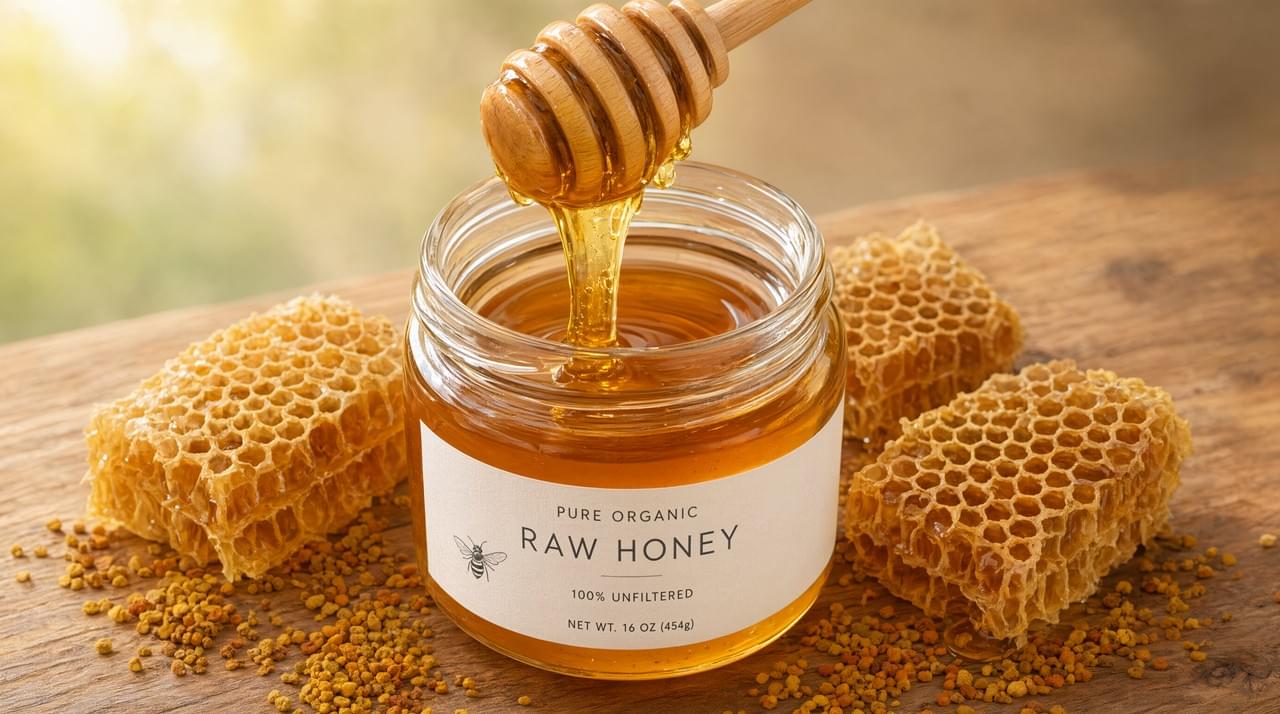
For importers and retailers, honey’s versatility creates several possible routes to market. Premium glass jars may suit specialty stores, while squeeze bottles can serve everyday shoppers. Gift sets offer another option for seasonal campaigns and corporate customers.
The right format depends on the target customer, price point, and distribution channel—not simply the product’s popularity.
3. What Buyers Expect From the Middle East Organic Food Market
Today’s buyers need more than attractive packaging. They want products that match their expectations and suppliers who can provide clear, consistent information.
Natural ingredients: Straightforward ingredient lists can appeal to customers seeking simpler food choices. However, natural honey is not automatically certified organic, so brands should use precise product descriptions.
Traceable sourcing: Importers should ask about honey origin, batch identification, product specifications, and available test reports. Reliable documentation makes supplier evaluation easier and supports stronger product communication.
Retail-ready packaging: Glass jars can communicate a premium image, while squeeze bottles offer convenience. Label design should also account for the destination market’s language, mandatory information, and applicable food regulations.
For businesses responding to Gulf region organic food demand, these details can help turn general consumer interest into a product proposition retailers can confidently evaluate.
4. The Organic Claims Gap Creates Room for Better Brands
One opportunity in the Middle East organic food market is to make product claims more credible and easier to understand.
Words such as natural, pure, and organic are not interchangeable. Certified organic products must meet the requirements of the relevant certification system, which may cover sourcing, production, handling, and documentation.
Before launching an organic honey product, buyers should verify the certificate’s validity and scope, confirm that it covers the intended product, and check the destination country’s labeling and import requirements.
🔎 A clear, evidence-based product story can help a brand stand apart from competitors relying on vague claims. It also reduces the risk of misleading labels and costly changes after packaging has been approved.
5. How Daily Honey OEM Helps Build a Private Label Brand
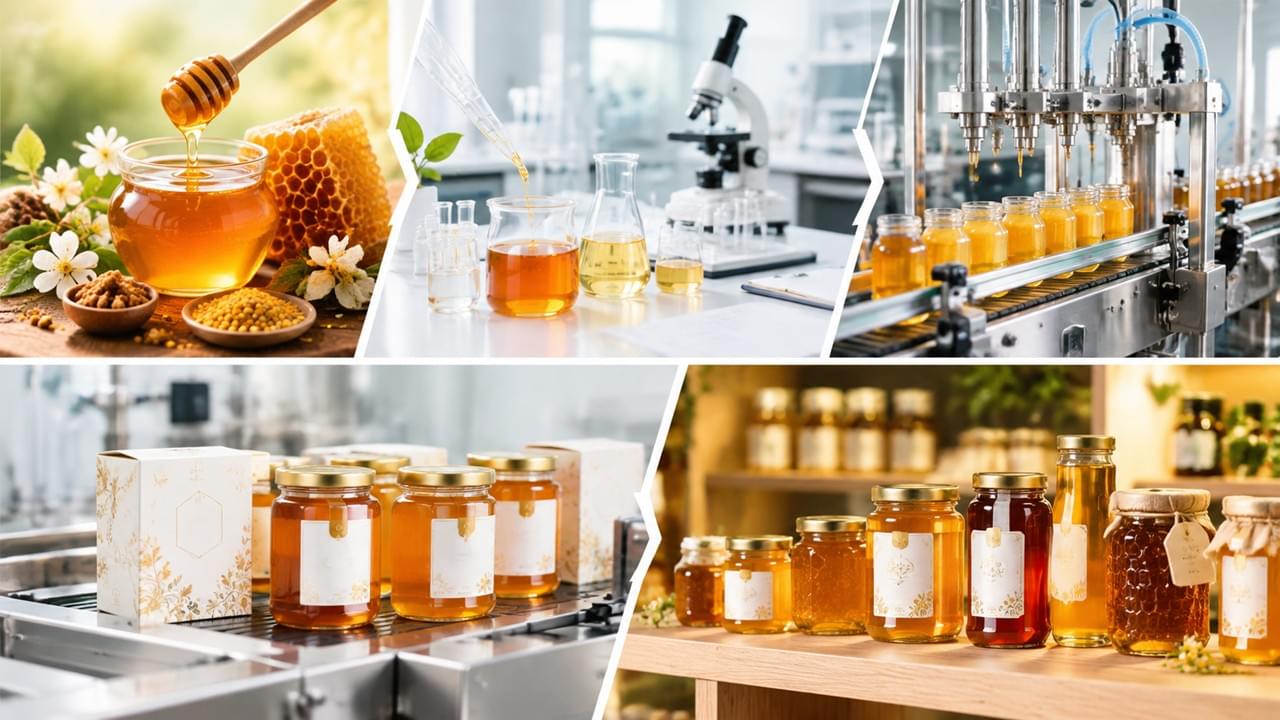
Working with an experienced supplier can simplify product development. Daily Honey OEM provides honey and bee-product solutions, including customized packaging and OEM services for businesses developing their own product lines.
Explore the available organic honey products to consider varieties such as acacia, Sidr, jujube, and wildflower honey. Each option should be assessed against the intended customer, sourcing availability, and required product specifications.
For businesses seeking an organic honey private label manufacturer, three steps are especially important:
- Define the target customer, retail price, and preferred package size.
- Request relevant product specifications, quality documents, and organic certification where applicable.
- Confirm minimum order quantities, artwork requirements, lead times, and destination-market compliance.
Daily Honey OEM’s OEM services offer a starting point for discussing customization, quality control, and production requirements. Certification claims should always be confirmed for the specific product rather than assumed from a supplier’s general capabilities.
6. A Practical Route Into the Gulf Region Organic Food Market
A successful launch begins with focused planning. First, choose the country and sales channel rather than treating the entire Gulf region as one market. Saudi Arabia and the UAE, for example, may have different customer expectations and regulatory procedures.
Next, compare competing products, establish a realistic price position, and review supplier documentation before approving labels. Confirm applicable food import rules with the relevant authorities or a qualified regulatory professional.
📦 Starting with a manageable product range can also help. Test customer response, gather retailer feedback, and expand only when sales data supports the decision.
7. Turn Market Potential Into Your Next Honey Product
The Middle East organic food market offers opportunities for brands that combine relevant products with dependable quality, transparent information, and thoughtful presentation. Saudi Arabia’s projected organic honey growth provides one reason to explore the category, but long-term success depends on more than market forecasts.
Daily Honey OEM can help businesses discuss honey selection, private label packaging, and OEM production options. To explore your project, contact the Daily Honey OEM team with your target market, preferred product, packaging requirements, and estimated order quantity.
Build your next honey product around a clear market position and claims your customers can trust.
 English
  Arabic