
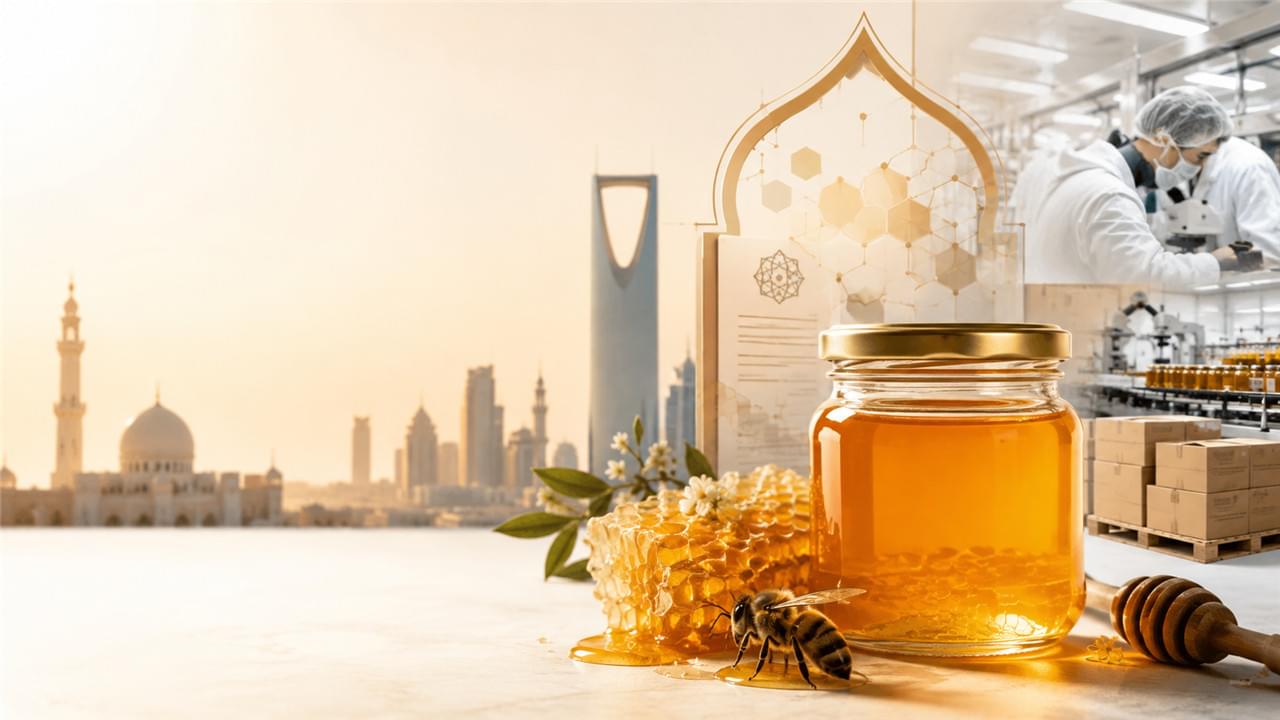
For honey brands targeting the Middle East, Halal Honey Certification can be more than a compliance requirement. It can become a powerful trust signal. Honey already has a strong cultural connection in Muslim markets, while consumers are increasingly interested in quality, authenticity, natural ingredients, and traceability. The source document identifies these trends as important opportunities for premium honey brands in Saudi Arabia and across the region.
For B2B buyers, the real opportunity is to combine religious compliance with strong food-safety practices, transparent sourcing, and attractive private-label packaging.
🌙 Why Halal Honey Certification Matters
Halal Honey Certification helps businesses demonstrate that their product and relevant production practices meet applicable Islamic requirements. For pure honey, the formulation may seem simple. However, commercial products can include flavorings, botanical ingredients, functional blends, or other components that require closer review.
That is why Halal food certification for honey should be considered early, especially when developing customized products. A certification strategy started during formulation is usually easier to manage than one added just before launch.
The importance of this approach is particularly clear in Saudi Arabia, where food businesses must also navigate SFDA requirements. The official Saudi Food and Drug Authority provides regulations covering food clearance, labeling, imports, and honey and bee-product controls.
🔎 1. Halal Honey Certification Starts With Ingredients
The first checkpoint is the ingredient list.
Pure honey is naturally straightforward, but a customized honey product may contain herbs, flavors, extracts, sweeteners, or other functional ingredients. Each component should be reviewed according to the requirements applicable to the intended certification and destination market.
For B2B brands, this is especially important when developing Halal honey products for the Middle East market. An OEM partner should be able to provide clear specifications and ingredient information before production begins.
This reduces the risk of discovering a formulation issue after packaging has already been printed.
🏭 2. Halal Honey Certification Also Covers Production
Ingredients are only one part of the picture. Production practices matter too.
Manufacturers should consider equipment, cleaning procedures, storage, handling, and potential cross-contamination risks. This is where disciplined food-safety systems become valuable.
Daily Honey OEM’s website states that its Saudi factory follows SFDA requirements and uses HACCP-based quality control. Its published services also include customized formulations, packaging, production, logistics, and after-sales support.
HACCP and Halal certification are not the same thing, but they can work together as part of a stronger quality-management approach. For buyers, that means fewer disconnected processes and better visibility throughout production.
📋 3. Halal Honey Certification Needs Traceability
A premium honey brand should know where its ingredients come from and how each batch moves through production.
The source document emphasizes traceability from hive to shelf as an important way to support authenticity and strengthen brand credibility.
For a B2B customer, useful documentation may include sourcing information, batch identification, ingredient specifications, production records, and relevant compliance documents.
This matters because today’s Middle Eastern consumer is not simply looking for “honey.” Many buyers want a product with a credible story behind it.
👉 Tip: Build traceability into the product system from day one instead of treating it as paperwork added at the end.
🇸🇦 4. Halal Honey Certification and Saudi Market Entry
Saudi Arabia deserves particular attention for honey brands planning regional expansion.
The source document estimates that Saudi Arabia’s honey market could reach approximately US$84.7 million by 2030, with organic honey identified as a particularly attractive growth segment.
However, certification alone does not guarantee market entry. Imported food products must also meet applicable Saudi requirements. SFDA states that imported food is subject to its regulatory framework, while its official resources specifically list requirements for importing food and for honey and bee products.
Packaging also deserves attention. SFDA references technical regulations for prepackaged-food labeling and nutritional labeling, making label review an important part of the launch process.
🤝 5. Why a Saudi Halal Honey OEM Can Help
Launching a compliant honey product independently can involve sourcing, formulation, manufacturing, packaging, documentation, and logistics.
A Saudi Halal honey OEM can potentially simplify this workflow by bringing several functions together. Daily Honey OEM positions itself as a Saudi-based manufacturer offering honey and bee-product customization, packaging, formulation, production, logistics, and after-sales support.
Its product range extends beyond conventional honey to options such as Sidr, Acacia, black seed, herbal honey, honeycomb, propolis, beeswax, and bee pollen.
For brands planning a broader bee-product portfolio, this can make OEM cooperation more flexible.
🛡️ 6. Certification Can Strengthen Consumer Trust
The strongest benefit of Halal Honey Certification may be the confidence it creates.
The source document notes that Middle Eastern consumers are willing to pay more for products associated with quality, authenticity, and uniqueness. It also highlights growing interest in sustainable sourcing and traceability.
That creates a compelling positioning opportunity:
🍯 Premium honey + 🌙 Halal compliance + 🔎 traceability + 🛡️ food safety + 📦 customized packaging
Instead of competing only on price, brands can build a clearer premium identity around trust and market relevance.
🌍 7. Halal Honey Certification Can Support Regional Growth
The opportunity extends beyond Saudi Arabia. Brands targeting the UAE, Qatar, Kuwait, and other Muslim-majority markets can consider Halal compliance as part of a broader regional strategy.
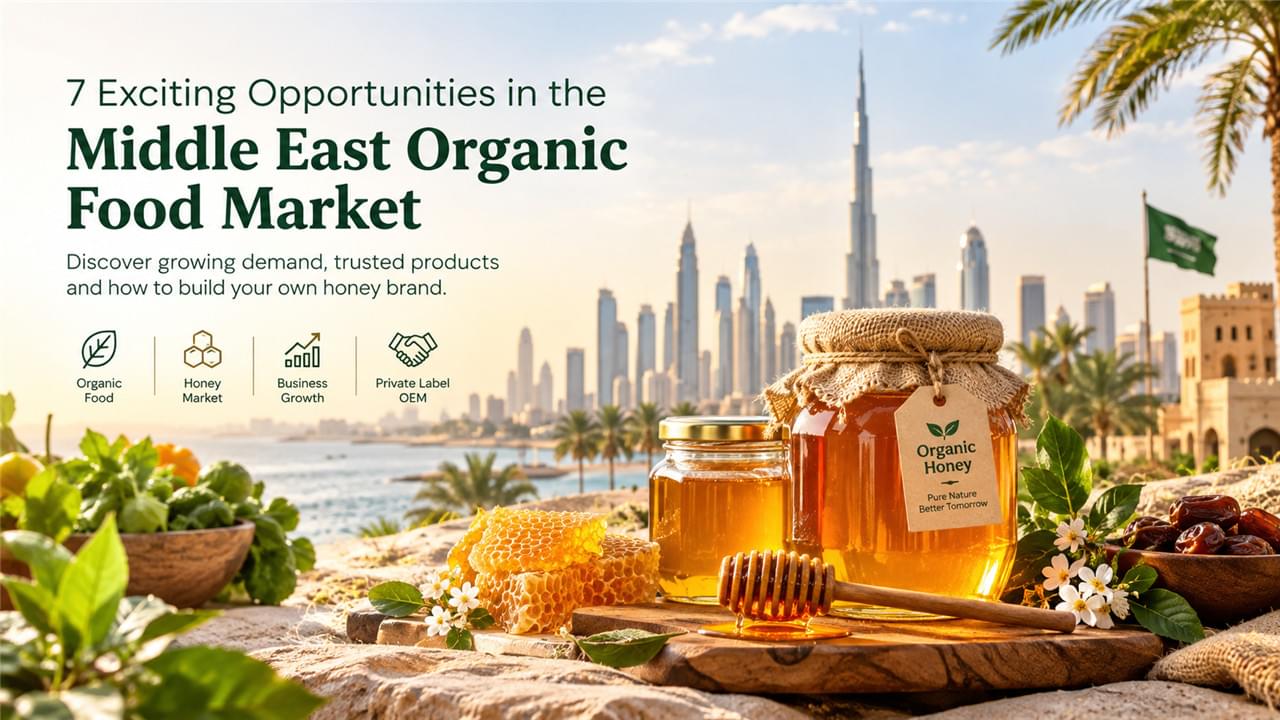
The source document identifies growing demand for organic and natural food products across these markets, alongside increasing retail interest in premium and traceable products.
Still, certification requirements can differ by market, product, and certification body. Businesses should confirm the exact requirements before making certification claims.
For the latest Saudi regulatory information, brands can review the official Saudi Food and Drug Authority regulations.
✨ Build a More Trustworthy Honey Brand
Halal Honey Certification should not be treated as a last-minute logo decision. For B2B brands, it works best when ingredient selection, manufacturing controls, traceability, labeling, and market requirements are considered together.
Daily Honey OEM’s existing honey OEM and bee-product solutions can support businesses looking for customized honey products, packaging, formulations, and Saudi-based production. Its published quality approach also highlights SFDA compliance and HACCP practices.
For brands preparing to enter the Middle Eastern market, the smartest starting point is simple: define your target market, confirm the applicable certification requirements, and choose an OEM partner that can support quality and compliance from the beginning.
🍯 Ready to develop your next Halal honey product? Explore Daily Honey OEM’s customized solutions and turn a traditional natural product into a market-ready brand built around quality, trust, and regional relevance.


 English
  Arabic